


How to Prepare for Sparring With Confidence
Sparring is where drills start to feel real. It is the chance to test your timing, distance, defense, composure, and decision-making against a moving training partner. Knowing how to prepare for sparring helps you get more from every round, whether you are new to Muay Thai, Brazilian Jiu-Jitsu, MMA, or returning after time away.
The goal is not to win practice. The goal is to become a better teammate and a more capable martial artist. Good preparation lets you train with intensity while staying controlled, respectful, and ready to learn.
Prepare for Sparring Before You Step on the Mats
Your best sparring round starts before the timer begins. Arrive early enough to warm up without rushing. A few minutes of light movement, mobility work, shadowboxing, drilling, or positional movement can raise your temperature and help your body respond more smoothly when the pace picks up.
For striking sparring, pay attention to your shoulders, hips, ankles, and neck. You will use all of them to move, throw, defend, and absorb contact safely. For grappling, prepare your wrists, fingers, knees, hips, and spine for frames, grips, takedown entries, and scrambles. If something feels unusually painful or unstable, tell your coach before the round. Pushing through ordinary effort is part of training. Ignoring a possible injury is not toughness.
Food, water, and sleep matter too. You do not need a perfect athlete meal plan to have productive rounds, but showing up dehydrated, exhausted, or underfed makes it harder to think clearly and control your emotions. If you train after work or school, keep a simple routine: hydrate throughout the day, eat enough to support your session, and give yourself time to digest before hard training.
Check Your Equipment
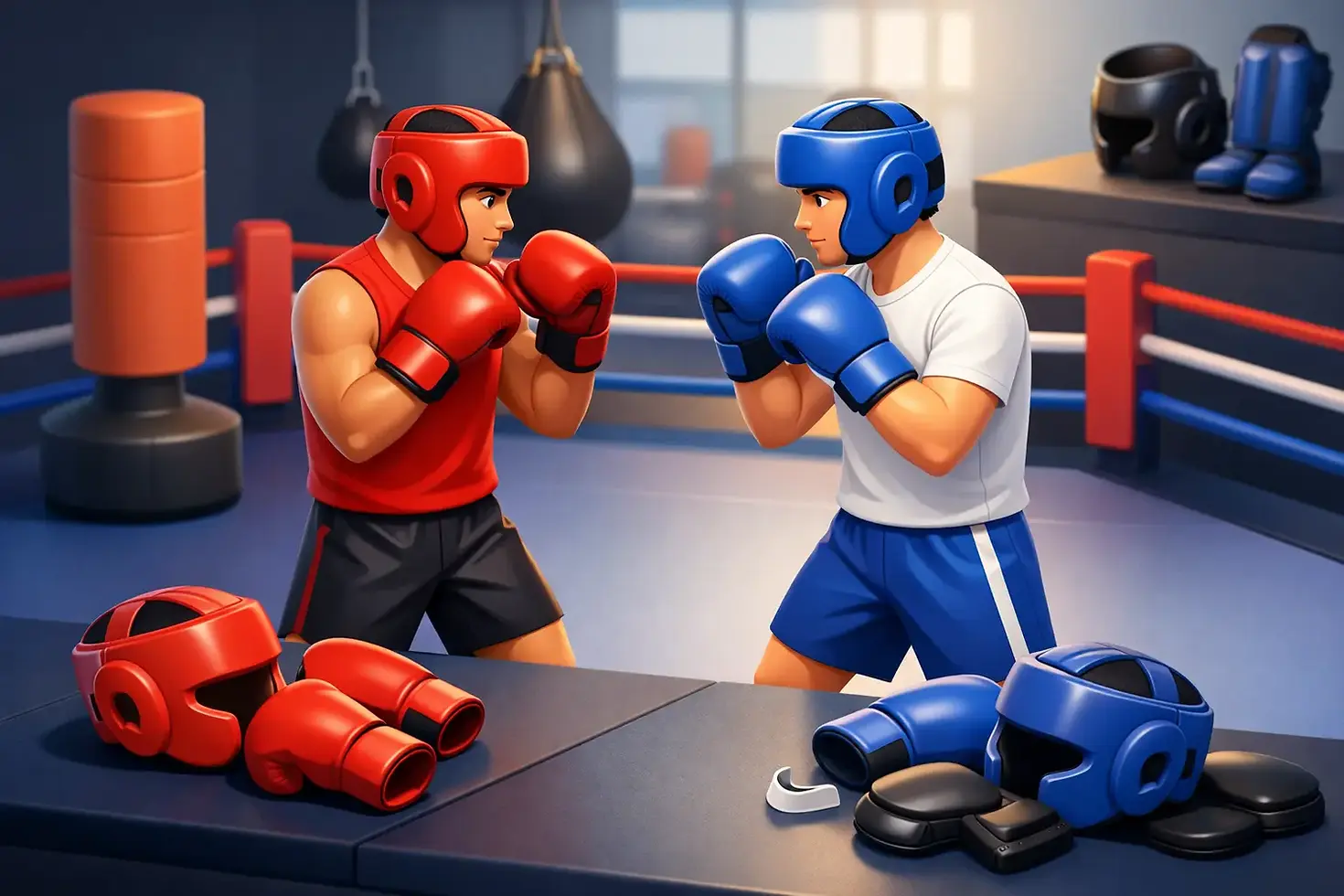
The right gear protects both people in the round. Bring the equipment your class requires and make sure it fits correctly. Worn-out gloves, loose headgear, a damaged mouthguard, or sharp fingernails can turn a useful training session into an avoidable problem.
Before sparring, check these essentials:
A properly fitted mouthguard for striking rounds
Gloves and shin guards that match the class requirements
Clean rash guards, shorts, or training attire without zippers or sharp edges
Trimmed fingernails and toenails for grappling
Water, a towel, and any protective gear your coach recommends
Hygiene is part of being a good training partner. Clean gear, clean clothing, and a clean body show respect for the people sharing the mats with you.
Set One Simple Goal for the Round
Trying to improve everything at once usually leads to tense, unfocused sparring. Pick one goal before you touch gloves, slap hands, or begin from your starting position. A clear objective gives the round purpose, even when things do not go your way.
A beginner striker might focus on keeping their hands up after every combination. A more experienced Muay Thai athlete may work on checking low kicks or exiting at an angle instead of backing straight up. In Brazilian Jiu-Jitsu, your goal could be maintaining strong posture in someone’s guard, recovering guard calmly, or attacking one specific pass.
For MMA sparring, choose a goal that matches the rules and the day’s lesson. Maybe you are working on entering safely behind a jab, defending the takedown against the wall, or controlling position after a takedown instead of rushing for a finish. Technical sparring is especially valuable because it gives you room to repeat the right decision.
Tell your partner what you are working on when it makes sense. This does not give away a secret. It helps create a better round. A partner who knows you are practicing defense, clinch entries, or escapes can give you realistic looks without turning the session into a test of ego.
Match the Pace to Your Experience
Hard sparring has a place in combat sports, but it is not the only kind of sparring and it is rarely the right place to begin. Light, technical, situational, and controlled rounds help athletes build skill with far less unnecessary damage. The best intensity depends on your experience, your partner, your recovery, and the coach’s plan for the day.
If you are newer, start by learning how to stay relaxed under pressure. Breathe. Keep your eyes up. Move with balance. Do not throw every strike at full power or grip so hard in grappling that your arms burn out in the first minute. Control is a skill, and it takes practice.
Experienced athletes have an even bigger responsibility. You can give newer teammates a challenging round without overwhelming them. Use clean technique, manage your power, and create opportunities for learning. A strong team gets better when people can train consistently, not when they leave every session discouraged or injured.
There is also a difference between feeling uncomfortable and being unsafe. Sparring will challenge your cardio, timing, and confidence. That is normal. But if your partner is ignoring agreed intensity, using unsafe technique, or making you feel at risk, pause the round and speak with a coach. Respectful communication protects the whole room.
Build Conditioning That Helps You Think
Sparring cardio is not just about surviving a hard round. It is about being able to make smart decisions when you are tired. When your breathing gets heavy, your guard drops, your stance narrows, and your technique can disappear. Structured conditioning helps you keep form when the work gets demanding.
You do not need to train like a professional fighter to improve. Consistent classes, bag work, drilling, technical rounds, strength work, and functional fitness can all build the engine you need. The key is steady effort over time. One exhausting workout may leave you sore, but regular training improves your ability to recover, repeat movements, and stay composed.
Conditioning should support your martial arts, not replace technique. Running, rowing, lifting, and bodyweight training can all be useful, but they work best alongside skill practice. Someone with great endurance but poor distance management will still get caught reaching. Someone strong enough to force a position may still lose it without balance and control.
At War & Peace MMA, sparring, technical drills, and conditioning can work together to help students build practical skills at their own level. The right mix depends on whether your focus is Muay Thai, BJJ, MMA, fitness, or a combination of all of them.
Use Calm Communication With Your Partner
A quick conversation before the round can make a major difference. Agree on the rules, intensity, and purpose. Are you going light? Are head strikes included? Is this takedown-only, position-only, or open sparring? Will you reset after a sweep, takedown, or submission attempt?
You do not need a long meeting before every round. A simple, “Light and technical?” or “Can we work from half guard?” is enough. Clear expectations prevent misunderstandings and help both athletes train with confidence.
During the round, stay coachable. If your partner asks you to ease up, ease up. If a coach gives you a correction, apply it immediately instead of defending what happened. The athletes who improve fastest are usually not the ones trying to prove they know everything. They are the ones willing to make adjustments.
Afterward, thank your partner. Ask one useful question if the moment is right: “What were you seeing when I kept getting caught with that?” or “Did you feel my weight shift before the sweep?” These conversations turn a tough round into a lesson you can use next class.
Have a Plan for After Sparring
The work is not over when the bell ends. Take a few minutes to cool down, drink water, and let your breathing return to normal. If you have a small scrape or sore spot, clean it and address it right away. If you took a hard shot, felt a joint tweak, or experienced symptoms that concern you, let your coach know before you leave.
Make a quick mental note of what happened. You do not need to write a full report, but remember one thing that worked and one thing you want to improve. Maybe your jab created space. Maybe you kept giving up underhooks. Maybe you panicked when pinned against the wall. Those details give you a starting point for your next drill session.
Sparring is not a performance you have to get perfect. It is a training tool you earn more from through preparation, patience, and consistent effort. Show up ready, train with control, take care of your teammates, and come back willing to improve one round at a time.


Comments